Love After Love: How to End a Marriage Without Breaking a Family
How to End a Marriage Without Breaking a Family
the part nobody tells you
Divorce is supposed to be subtraction.
The home you knew goes. Time with your children goes. Friends go. The future you thought you were building goes.
Some of that you cannot change. What happens next, you can.
This is a book about getting through the worst of divorce without letting it decide who you become — and discovering that an ending doesn't always have to mean less.
We ended up with more.
The most difficult speech I have ever written was the one I gave at my ex-husband's wedding.
Not because it was my ex-husband's wedding. Because I was trying to describe something most people don't believe is possible.
I told his new wife, Tatiana, that she was one of the best things to happen to our family.
There are few socially acceptable ways to say that without somebody looking for the knife. I meant it.
the speech, in full
Watch the wedding speechThat evening people kept asking me the same question.
How did you get here?
Not to the wedding. To this.
For a long time I didn't have an answer.
This book is an attempt to answer that question.

I'm Lea.
I have an MBA from Harvard Business School and have spent most of my career investing in and building companies.
None of which qualifies me to write about divorce. I'm not a therapist, a psychologist or a divorce coach. I did, however, live through it, refuse to accept bitterness as the inevitable ending, and spend the next few years trying to understand how we'd got there.
We stumbled and fumbled. There were good days, bad days, days where Lucian and I found each other considerably easier to love from a distance, and one or two occasions where I forgot everything in this book and did my level best to sabotage the whole thing. We got there anyway.
Somewhere along the way I also performed in a Parisian cabaret under the leadership of a Crazy Horse star. This was not part of the original business plan.
The math is not mathing.
I have spent my working life as an investor. Some habits are hard to shake. I notice what compounds, I dislike wasting perfectly good assets, and I think a lot about where I put my energy and what the return is. This explains quite a lot of the book.
Don't waste your ex. The marriage ended. It doesn't follow that everything valuable in it did.
I mispriced almost all of this at the start. The decisions I expected to matter were the ones with invoices attached — the mediator, the therapist, the second home we could not sensibly afford. They all helped. They created the container. What happened inside it was still up to us.
The highest returns turned out to come from the things nobody billed me for. The reply I didn't send. The apology I made first. Speaking well of my daughter's father when I was tempted to do otherwise. Those compound. So, unfortunately, does an eye-roll.
Most of the things that made a difference cost nothing. None of them were free of effort. It was usually the effort I least felt like making.
All of this would be considerably more impressive if I had managed it consistently. I sent WhatsApp rants so long they deserved their own table of contents and were almost certainly never read. I lost my temper. I got things wrong. None of that was fatal. The next decision still counted. You do not have to get every moment right. You have to course-correct faster.
The need to be right has a prohibitively poor return on investment. Justice, if it arrives at all, rarely comes in the form you were hoping for and almost never on your schedule. The work was the fastest route I found to the thing I actually wanted.
Freedom.
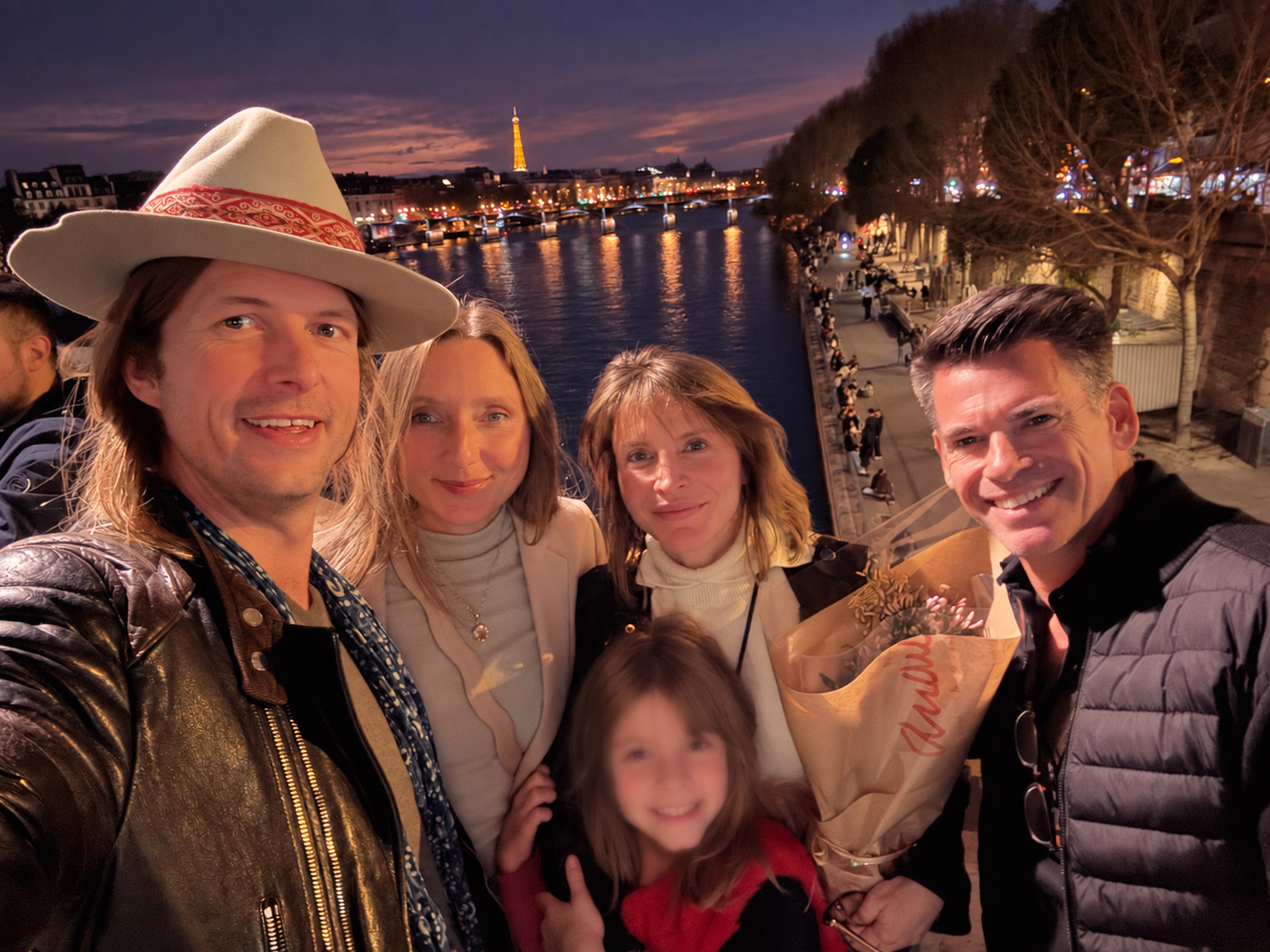
Our marriage ended, but our family didn't. Leonie gained more people in her corner. Lucian and I found a different relationship. I rebuilt my own life and fell in love again. Tatiana became family.
None of this was the plan.
There is no single place to be after divorce.
- 01
You might be staring at your phone at two in the morning, wondering whether sending the text to your ex is a terrible idea or a brilliant one.
- 02
Lying awake wondering whether you have permanently damaged your child.
- 03
Realising you've lost more than a relationship. The home. The identity. The version of yourself who lived inside the life you thought you were building.
- 04
Discovering that an ex moving on was considerably easier to support before the ex actually did it.
- 05
Knowing that carrying resentment for the next twenty years is probably not the answer, but having absolutely no idea what the alternative looks like.
- 06
Or wondering how you are ever supposed to trust yourself to choose again.
The book is built for all of those moments. Read straight through, it follows what comes after a marriage ends. Or go straight to the part you need.
I hope you do it differently
Getting through it isn't the whole point.
This isn't a template or a prescription for the right way to divorce. In fact, I hope you do it differently. The point is to build something that works for your life, not something that looks like mine.
Success might mean going from hostile to merely tense. From obstructive to functional. From taking every piece of bait to occasionally leaving one sitting there. Or nothing between you changes, and you spend less of your life thinking about them. It might mean your child no longer having to work out which parent they're allowed to love out loud.
Success isn't getting here. It's getting somewhere better than where you are now.
It starts after the paperwork.
This isn't a guide to getting divorced. There are excellent books for that.
This one starts after the paperwork, when everybody professionally involved has moved on with their lives and you still have yours.
And life keeps arriving. Christmas. Money. School. Grandparents. Old friends. Old grievances with remarkable longevity. Your ex falling in love. You falling in love. Their new partner becoming important to your child. Siblings nobody anticipated when you first drew the family tree.
There is psychology and research. There are practical tools. There are quite a few mistakes. There is also an emotional-support omelette pan, an unusual number of toads and a word you probably haven't met before.
Bebiggle.
You'll understand.
- 01
Why being right and being free are sometimes competing objectives.
- 02
Why your ex thriving might be very good news.
- 03
Why children care less about the geometry of a family than whether they can relax inside it.
- 04
Why the work isn't getting back to yourself.
- 05
How to choose love again without recreating what you left.
- 06
And what keeps love alive once you find it.
Nobody designs a life like this.
I'll send you the opening chapter and tell you when the book is ready.
Opening chapter
Nobody designs a life like this. It accumulates, one decision at a time, most of them too small to feel like decisions. A generous interpretation here. A proper apology there. Responsibility instead of blame. A phone call. Welcome instead of resentment. None of those moments feels like it changes a life. Together, they do.
The life on the other side of this work is real. Not perfect, not painless, not free of disappointment or conflict or the occasional spectacular misjudgment. Real.
A note on scope
Love After Love isn't written for relationships that are abusive, coercive, controlling or unsafe.
If you're frightened of your partner, the thing to protect isn't the relationship. It's you.